Most homeowners hire a roofer twice, maybe three times, in the whole time they own a house. That's not enough reps to build real judgment about it, the way you'd build judgment about a mechanic over years of oil changes. So people end up picking based on who answers the phone fastest or whose truck magnet looks the most official. That's how bad roofs happen. Not because the material failed, but because nobody checked the work underneath it before the shingles went down.
Start with the license, not the sales pitch
In California, roofing work requires a C-39 contractor's license through the Contractors State License Board. You can look up any license number on the CSLB website in about thirty seconds and see if it's active, what classification it covers, and whether there's a bond and workers' comp insurance attached. If someone hesitates to give you a license number, or gives you one that comes back under a different company name, that's the end of the conversation right there. General liability coverage of at least a million dollars is standard for a roofing crew working at height on a homeowner's property. Ask to see the certificate, not just hear that it exists.
Storm chasers are a real thing here, especially in late fall and winter when Santa Ana wind events have been strong enough to lift ridge caps and loosen tile. A crew going door to door the week after a 50 mph wind day, offering a free inspection and a same-day signature, is working off adrenaline and urgency, not a license number you can check. A legitimate roofer will let you sit on a quote for a few days.
What a real estimate actually looks at
A written estimate worth anything describes the decking, not just the shingles. A lot of houses in the older Buena Park tracts built through the 1950s and 60s were sheathed with 1x6 skip sheathing instead of plywood. That board spacing was fine for wood shakes decades ago, but it's not a nailing surface modern composition shingle wants, and most codes now call for a plywood overlay, usually 7/16 or 1/2 inch, before the new roof goes on. If an estimate doesn't mention decking condition at all, that means nobody's been in the attic or pulled back a test section to look.
The underlayment matters more than people think, because it's the actual waterproofing layer, the shingles are mostly there to shed UV and hold it down. Synthetic underlayment has mostly replaced 15 and 30 pound felt because it doesn't tear as easily underfoot and handles heat better, which matters here when a July deck surface can sit well over 150 degrees in direct sun. A good estimate names the underlayment product, the nailing pattern, and whether valleys get a separate metal flashing or woven shingle. Vague line items like "complete tear-off and reroof, materials included" with no detail are a sign the quote was built fast, not measured.
Permits aren't optional, and they protect you
A full tear-off and reroof in Buena Park needs a permit through the city's building division. That means an inspector checks the nailing pattern on the new decking before underlayment covers it, and does a final inspection once the roof is on. Skipping the permit doesn't just risk a fine, it means nobody independent of the contractor ever looked at the work. If a roofer offers to skip the permit to save time or money, understand what you're actually trading away: the only outside check on whether the job was done to code.
A lot of streets in Buena Park, particularly in the newer developments off Beach Boulevard and toward La Mirada, sit inside HOAs with their own rules on roof color, tile profile, or even which manufacturer's product is approved. Your contractor should ask about this before ordering material, not after a pallet of the wrong tile shows up in your driveway.
Materials that make sense for this climate
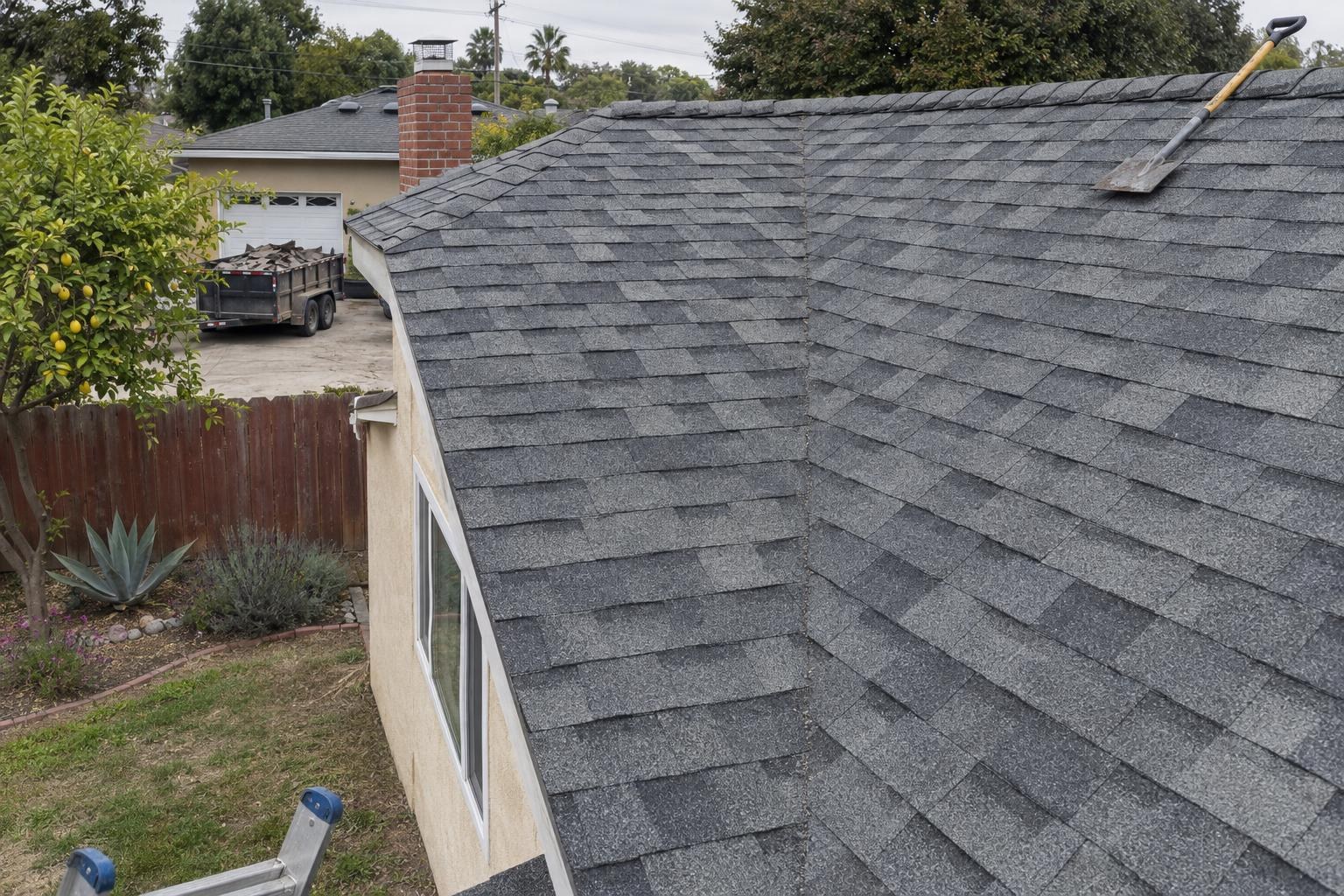
Composition shingle is still the most common roof here, and a mid-grade architectural shingle typically runs 20 to 25 years in this climate before granule loss and UV breakdown catch up with it. That number drops if attic ventilation is poor, because trapped heat under the decking cooks the shingle from underneath as much as the sun cooks it from above. If your attic doesn't have enough intake at the eaves and exhaust at the ridge, a roofer who's paying attention will flag it, because new shingles over bad ventilation just buys you a shorter warranty life.
Tile roofs, common in the newer subdivisions built from the 1980s on, can last 50 years or longer as a material, but the underlayment beneath the tile usually gives out first, somewhere around the 20 to 25 year mark. At that point the tile itself often gets reused and the roof gets what's called a lift and relay, where the field is stripped, new underlayment goes down, and the original tile goes back on. That's a very different job and price than a full tile replacement, and a contractor should be clear with you about which one you actually need.
Flat and low-slope roofs, which show up a lot on additions, patio room conversions, and garage extensions, need real attention to slope. A quarter inch of fall per foot is the minimum to keep water moving instead of sitting and ponding. Standing water on a flat roof is where modified bitumen and older built-up roofing fail first, usually at a seam or a pitch pan around a vent pipe. TPO has become common for flat work because it welds at the seams instead of relying on adhesive alone, and it handles the heat here better than older asphalt systems.
What to walk away from
- A bid that's dramatically lower than every other one you got. Shingles, underlayment, flashing, and labor cost roughly the same no matter who's bidding. A number that's 30 to 40 percent under everyone else usually means a shortcut somewhere you won't see until it leaks.
- Pressure to sign the same day, especially right after a storm or a wind event.
- No mention of decking inspection, no mention of ventilation, no mention of a permit.
- A request for full payment up front. A deposit for material is normal. The balance should be due on completion, after you've looked at the finished roof.
- No answer when you ask what happens if they find rotten decking once the old roof comes off. That's common enough that a straight answer with a per-sheet replacement cost should already be part of the conversation.
Roof certifications and selling your house
If you're buying or selling a house in California, your lender or insurer will often want a roof certification, a written report on the remaining life of the roof, usually good for two to three years. This isn't the same as a full inspection for repair purposes, it's a narrower document built for a real estate transaction, and it should come from someone who'll put their license number on it.
None of this is complicated once you know what to ask. Check the license, get the decking and underlayment named in writing, confirm the permit is being pulled, and be suspicious of anyone in a hurry. We go through all of it with homeowners before a single shingle comes off, and you can see the kind of roofing work we do at Blackridge Roofing Contractors.